Harlequin
Shrimp
Hymenocera
elegans
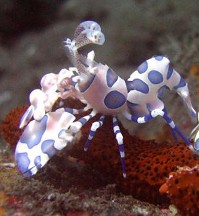
Have a problem
witht the tiny white starfish (Asterina), in your reef?
This shrimp will cure your problem.
Description:This truly is one of
the most stunning and beautiful Shrimps to be found. With good
water quality, a peaceful environment and the proper food, you
should have no trouble in maintaining this species for a good
many years. The body is of a pinkish-white or white color, splashed
with large purple-edged pink spots, and sometimes reddish or
light orangish toned looking spots. This shrimp remains very
small, only reaching an average length of 1 to 2 inches. Like
with all invertebrates, this shrimp is sensitive to copper and
high nitrate levels.
Care: As with any marine species,
water quality plays an important role in ensuring they remain
healthy. Being an invertebrate, shrimp do not tolerate anything
less than perfect reef grade water. If you can provide consistent
water quality, you should have no trouble at all in being able
to keep your Harlequin shrimp healthy and free of problems.
If you must use a synthetic salt mix, prepare the water at least
two days in advance of it being needed to allow it to age and
become properly mixed and aerated. Prior to use,ensure the new
waters pH, salinity and temperature match the water the shrimp
are in. They are easily affected by sudden changes and any water
changes done with synthetic mixes should be gradual, doing no
more than ten to twenty percent at a time, allowing a day between
changes. Again, we must stress the importance of water quality
and not shocking the shrimp with rapid synthetic water changes.
These factors alone account for many shrimp deaths.
Being a timid species, it is also vital to ensure their aquarium
is safe from predators or other animals that may harass them.
Even a fast moving fish passing by can cause these shrimp stress
and they may go into hiding and be unable to properly eat. For
breeding purposes, a tank dedicated to a single mated pair is
a must. As pets, taking the simple precautions of having pump
inlets protected and any possible predators removed will make
keeping this species a simple matter.
Food and
diet:Pieces
of Starfish are the food nescessary to keep Harlequin shrimp.
We recommend the Chocolate Chip Starfish, since you can cut off
the arms without killing the starfish. The Chocolate chip starfish
is easy to maintain and feed upon readily obtained seafood meats
such as clams and oysters. Such a steady, meaty diet will ensure
that the starfish can regrow its lost limb(s) much faster than
other starfish groups.
Recommended
minimum tank size: 10 gallon
or larger
Reef Compatibility:Very good
Approximate
Purchase Size: 1"
Recommended
Reading: The
Care and Breeding of Harlequin Shrimp by Charles and Linda Raabe |
Starting at $39.99
|
Saron
Shrimp
Saron
sp
|
Description:
Also called
Monkey shrimp , marbled shrimp, or buffalo shrimp, is a easily
cared for species that is perfect for reef aquariums. During
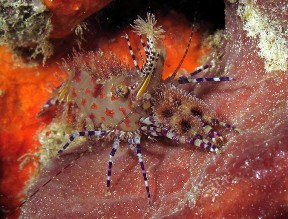
daylight the Saron Shrimp is a brown color with green spots;
however, these green spots will have variable amounts of white
speckling. The Saron Shrimp is nocturnal, and at night, the color
of its body turns primarily red, which helps it blend into the
shadows of the twilight. The legs have darker brown bands on
a brown background with alternating white speckled bands and
their first pair of walking legs are elongated. Tufts of cirri
(feathery appendages) are found decorating the back of the males.
When introduced into the marine aquarium, the Saron Shrimp will
need a dark place in which to hide and hangout until dusk. Initially
the Saron Shrimp will come out only at night, but after acclimating,
it will start to wander about during the daylight. The Saron
Shrimp is usually found in the coral rubble at the base of the
reef or in low lying crevices within the rock. As with most all
invertebrate species it is intolerant of copper or high nitrates,
and will require a correct level of iodine in the water for proper
molting.
As with most
shrimp the Saron Shrimp is primarily a scavenger and will comb
the substrat of the aquarium looking for any leftover meaty items.
It's diet should also be supplemented with meaty foods such as,
brine shrimp, plankton, flaked food, frozen food, and small pieces
of fish.
Food and diet:As with most
shrimp the Saron Shrimp is primarily a scavenger and will comb
the substrat of the aquarium looking for any leftover meaty items.
It's diet should also be supplemented with meaty foods such as,
brine shrimp, plankton, flaked food, frozen food, and small pieces
of fish.
Recommended
minimum tank size: 10 gallon
or larger
Reef Compatibility:considered reef safe,
but it may bother some polyp and Zoanthid corals.
Approximate Purchase Size: 1" to 1 1/4" |
REEF SAFE
$8.99 ea.
ss |
ss |